
Water Pipe Replacement in Gravesend
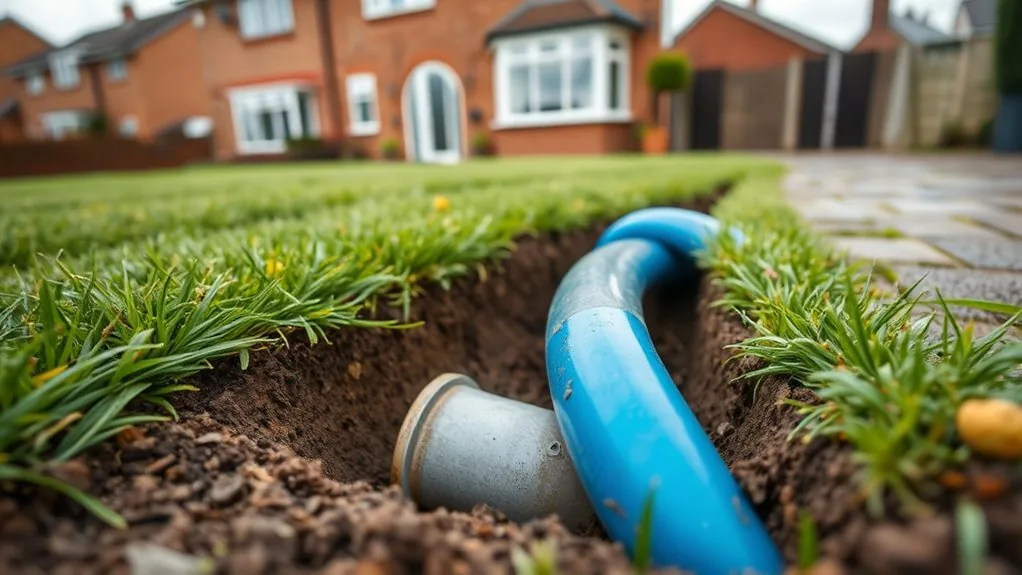
If your water supply pipe in Gravesend is made of lead or is failing, it can cause contamination risks and unstable water pressure.
Replacing it with a regulation-compliant MDPE or barrier main using trenchless renewal avoids most excavation and ensures your system meets Water Fittings Regulations.
Call now for a fast quote or emergency callout in Gravesend.
Although many properties still rely on original supply lines installed decades ago, water pipe replacement is the process of fully or partially renewing those pipes—from the external mains connection into your building’s internal plumbing—to eliminate aged, corroded, undersized, or contaminated pipework. You’re not just swapping pipes; you’re upgrading the full supply route to meet current Water Supply (Water Fittings) Regulations and local water authority standards.
In practice, replacement involves isolating the old line, installing a new MDPE or barrier pipe, and pressure-testing and chlorinating it before reconnection. This mitigates pipe corrosion risks, reduces contamination pathways, stabilises water pressure, and improves flow rates. It also prepares your system for modern fixtures that demand consistent pressure and compliant materials.
When supply pipes are nearing the end of their service life, you typically see a combination of clear risk indicators that mean replacement—not patch repair—is the compliant option. In Gravesend, you’re expected to act when your supply presents health, leakage, or structural risks, especially with legacy pipe material such as lead or corroded iron.
You should consider full water pipe replacement if you notice:
Ignoring these signs can breach Water Supply (Water Fittings) Regulations and your duty of care, exposing you to contamination risk, property damage, and higher long‑term costs.
When you replace lead or ageing service pipes in Gravesend, the process starts with a structured site assessment to locate existing utilities, confirm pipe routes, and identify any code or contamination risks. Where suitable, trenchless installation methods are then used to install new WRAS-compliant water mains, followed by controlled connection and commissioning to your internal plumbing. Finally, the contractor must carry out pressure testing, chlorination (where specified), and documented final checks to prove performance and compliance with Water Supply (Water Fittings) Regulations.
Before any excavation or pipework begins, a structured site assessment is carried out to determine the exact condition, material, and routing of your existing water service pipe. Engineers confirm if you’ve got lead, galvanized steel, or other legacy materials, checking for pipe corrosion, external damage, and non-compliant fittings.
They’ll locate your incoming main, internal stop tap, and any branching supplies, then measure static and dynamic water pressure to identify flow restrictions, leaks, or partial blockages. Existing meter positions and boundary points are verified against local authority and water undertaker records.
Risks to underground utilities, foundations, and paved or landscaped areas are mapped, ensuring the replacement route stays compliant with UK Water Regulations, separation distances, and safe working practices.
Although it’s often called “no-dig,” trenchless installation still relies on carefully controlled excavation at just a few key points rather than a full open trench. Your contractor will typically create a launch pit at the boundary and a reception pit near your entry point, confirming depths and existing services against utility records.
They’ll then use either moling or pipe bursting, depending on soil conditions, existing main condition, and specified pipe material. With moling, a pneumatic “mole” drives a pilot bore, then the new MDPE service pipe is drawn back. With pipe bursting, the old line is fractured while simultaneously towing in the replacement. Both methods sharply reduce surface disruption, spoil volume, and Environmental impact, but still require strict control of ground movement and separation from other utilities.
With the new service pipe installed by trenchless methods, the focus shifts to making a safe, compliant connection and bringing the line into service. Your contractor exposes the utility main and your internal stop tap, then installs approved fittings, ensuring electrical bonding and separation from potential contamination sources. Jointing methods are selected to minimise leak paths and future pipe corrosion.
They’ll size the connection to maintain adequate water pressure without overloading older internal plumbing. Depth, insulation, and backfill all follow current Water Supply (Water Fittings) Regulations and local authority guidance.
| Stage | Key Risk Control |
|---|---|
| Main connection | Use certified fittings, maintain hygiene |
| Internal tie‑in | Protect against strain, thermal movement |
| Commissioning activation | Open valves gradually, monitor behaviour |
Once the new pipework’s connected and live, your contractor carries out systematic testing and final checks to prove the service is safe, watertight, and compliant. They’ll isolate the new main, then perform a controlled mains flush to expel debris, legacy lead particles, and any residues that could accelerate pipe corrosion.
Next, they’ll complete a calibrated pressure test, monitoring water pressure over a defined period to confirm there are no hidden leaks, joint failures, or deformation under load. Any deviation outside permitted tolerances triggers investigation and rectification.
Finally, they’ll verify flow rates at key outlets, check stopcocks and boundary fittings operate correctly, and confirm earthing/bonding requirements. Documentation, including test results and asset locations, should be issued for your records.
When you’re comparing modern water pipe replacement methods to traditional excavation, you’re really weighing surface disruption and risk against control and accessibility. Trenchless techniques maintain compliance with UK Water Regulations while minimising damage to drives, gardens, and services. You still get full specification control over pipe durability, internal diameter, and approved barrier materials.
A key distinction is how each method manages leak prevention, third‑party asset protection, and reinstatement quality:
| Aspect | Trenchless Replacement vs Traditional Excavation |
|---|---|
| Surface disruption | Minimal access pits vs continuous open trench |
| Service strike risk | Reduced exposure vs prolonged, open utilities |
| Structural / traffic loading | Smaller weakened areas vs long disturbed runs |
| Programme / sequencing control | Short, defined windows vs extended open works |
Selecting water pipe replacement over ongoing repairs or partial upgrades isn’t just about modern methods; it’s about long‑term risk reduction, regulatory compliance, and whole‑life cost control. By renewing the entire line, you eliminate legacy defects, hidden joints, and pipe corrosion that can’t be fully mitigated by piecemeal work.
In practice, full replacement gives you a safer, cleaner, and more controllable underground infrastructure.
Although lead and ageing water pipes present similar hazards across all properties, the technical, legal, and operational drivers for replacement differ between domestic and commercial settings. In homes, you’re primarily protecting occupants’ health and ensuring stable water pressure, but you still must consider current pipe material, water quality, and compliance with Water Supply (Water Fittings) Regulations.
In commercial premises—schools, healthcare, hospitality, industrial units—you’re additionally managing duty-of-care, legionella risk, and business continuity. Pipe upgrades become part of your wider risk register and statutory compliance strategy.
| Setting | Primary Risks | Key Focus |
|---|---|---|
| Domestic | Lead exposure, low flow | Safe, durable pipe material |
| Commercial | Compliance breaches, downtime | Phased, low-disruption works |
| High-risk | Vulnerable users, contamination events | Enhanced water quality control |
Because ageing mains, supply pipes, and internal plumbing each carry distinct risks, our water pipe replacement service in Gravesend is built around a full end‑to‑end approach: survey, specification, installation, chlorination, and certification. You get a condition-led solution that addresses leaks, pressure loss, contamination pathways, and non-compliant materials in one coordinated process.
We begin with a detailed survey and tracing of existing routes, evaluating pipe maintenance history, leakage patterns, and serviceability. Designs follow Water Regulations, local water company standards, and best practice for trenchless installation.
We then install WRAS-approved barrier or MDPE pipework, pressure-test, disinfect, and sample to documented protocols. Correctly sized, well-jointed replacement mains improve resilience, support water conservation, and reduce unaccounted-for losses across your Gravesend property portfolio or single dwelling.
When you appoint us to replace water pipes in Gravesend, you’re getting a specialist contractor that understands both the technical and regulatory implications of intervening in potable water infrastructure. We assess your existing supply for pipe corrosion, joint integrity, and hydraulic performance before proposing a solution.
You benefit from engineers who design to UK Water Industry Specifications and local water undertaker requirements, so your new service main is compliant, pressure-rated, and future-proofed. Our trenchless methods minimise structural risk to your property while maintaining safe separation from gas, electric, and telecoms.
We model expected water pressure and flow to ensure that replacement pipe diameters and materials are correctly matched to your demand, reducing the risk of bursts, backflow, contamination, and costly emergency interventions.
You’ll rightly want clear answers on how long replacement typically takes, whether trenchless methods are more cost-effective than open-cut digging, and if your specific address in Gravesend is within our service area. These factors affect not just cost and disruption, but also how quickly your supply can be upgraded to current Water Supply (Water Fittings) Regulations and relevant British Standards. In the FAQ below, you’ll find concise, risk-focused guidance on each of these points so you can plan works with confidence.
Although every property is different, most water pipe replacement projects in Gravesend take anywhere from a single day for a straightforward external mains replacement to several days or more for full internal re-piping, especially in older homes with lead or galvanised steel lines.
Duration depends on access, route complexity, and existing pipe material. A simple like-for-like mains upgrade, installed to Water Regulations standards, is often completed in one working day, including pressure testing and disinfection. Where internal risers, branch lines, and stop taps need reconfiguration to stabilise water pressure or correct historic defects, you should allow several days.
You’ll typically have the supply isolated for a few hours, then reinstated the same day, with final reinstatement and commissioning checks completed shortly afterward.
Project duration isn’t the only planning factor; cost and disruption matter just as much, which is why many homeowners ask if modern water pipe replacement methods are actually cheaper than traditional open-cut digging. In many domestic scenarios, trenchless renewal is cost‑competitive or cheaper once you factor in reinstatement.
With open-cut, you’re paying for extensive excavation, spoil removal, reinstating drives, paths, landscaping, and sometimes traffic management. Trenchless techniques typically use small launch pits, reducing surface damage and associated making‑good costs.
You’ll still need compliant pipe materials (often barrier MDPE) and proper fittings, but these are required either way. Where you gain is reduced labour time, less risk to other buried services, and fewer consequential costs—while simultaneously improving water quality and long‑term infrastructure performance.
Wondering if your part of Gravesend’s included? It almost certainly is. We cover all major towns and rural locations across Gravesend, including Canterbury, Ashford, Maidstone, Medway, Tonbridge, Tunbridge Wells, Thanet, Dover, Folkestone, and surrounding villages.
Before booking, we’ll confirm your exact postcode, site access, and utility constraints so the trenchless method is technically viable and compliant with UK Water Supply (Water Fittings) Regulations. If there are constraints, we’ll flag them clearly.
Our coverage is designed to support long‑term pipe maintenance and protect water quality by eliminating lead and failing mains. Where local highways, shared drives, or complex boundaries are involved, we coordinate with the relevant authorities so your replacement is safe, low‑risk, and fully certified.
Yes, trenchless water pipe replacement can upgrade your supply by removing old lead pipes. The service line from the boundary to your property is replaced with new MDPE or similar approved material, following current Water Supply (Water Fittings) Regulations. Installers should identify all lead sections, pressure-test, chlorinate, and certify the new main, but you must confirm the utility’s side is lead-free for full risk reduction.
Yes, your water pressure and flow rate can improve after trenchless mains renewal. Replacing undersized or corroded pipes with correctly sized, smooth-bore pipes can increase performance by up to 40%. However, improvements depend on the new main having an adequate diameter, few bends, and no internal restrictions, and pressure is still limited by the street main and stop tap, which a contractor should check for compliance with Water Regulations.
Yes, you usually need permission from the water board before replacing your supply pipe, especially where it connects to their main. They must confirm who is responsible for the boundary, approve the pipe materials, and ensure water quality and pressure are maintained. You should notify them before starting work, as some require formal applications, inspections, and chlorination certificates.
Yes, you can usually replace only part of a shared or communal water supply pipe. However, you can only work on the section you own, and the changes must not affect pressure, flow, or water quality for other users. You will need written consent from co-owners, utility mapping, compliance with Water Supply (Water Fittings) Regulations, proper isolation, and a clear plan to prevent dead-legs or contamination.
The exact route of your existing underground pipe is located using electronic pipe mapping with a signal generator and receiver attached to the live pipe or meter. Additional tools like ground-penetrating radar or acoustic listening are used to confirm the pipe’s depth, alignment, and junctions. Utility plans are checked to avoid interference with other services, and all findings are marked on site and recorded to reduce strike risk and ensure compliance.
Need to replace lead or aging water pipes in Gravesend and want clear costs up front? Request a structured, itemised quote that reflects current regulations, your existing pipe material, and the trenchless methods suitable for your property. You’ll want costs separated for survey, pipe replacement, connection, reinstatement, and any boundary work.
Provide accurate details on pipe length, location, depth, and current water quality issues (discolouration, low pressure, metallic taste). A compliant contractor should confirm whether lead replacement grants or local authority requirements apply and specify approved pipe material (typically WRAS‑approved MDPE) and fittings.
Insist on written confirmation of isolation procedures, temporary supply arrangements, and reinstatement standards. That way, you can compare like‑for‑like quotes, control risk, and plan your replacement with confidence.